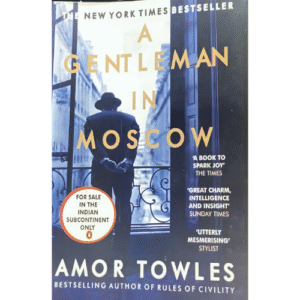
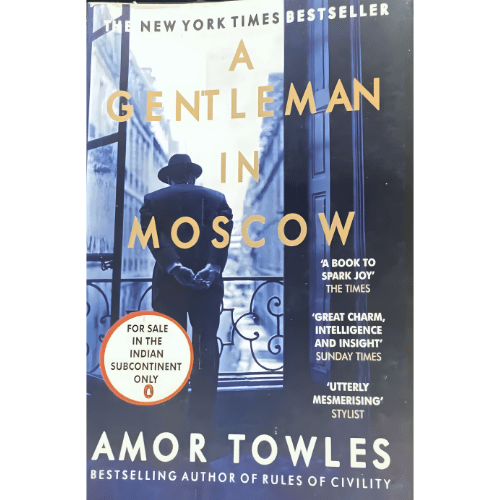
A Gentleman in Moscow by Amor Towles stands firmly among modern timeless books, blending history, wit, and emotional depth into a luminous literary achievement. Widely regarded as one of the best books of all time in contemporary historical fiction, this internationally acclaimed novel invites readers into the elegant yet confined world of Moscow’s grand Hotel Metropol. Within its gilded halls and quiet corridors unfolds a story not of imprisonment alone, but of resilience, dignity, and the art of living fully despite limitation.
The novel opens on June 21, 1922, when Count Alexander Ilyich Rostov—an aristocrat of impeccable manners and cultivated intellect—is summoned before a Bolshevik tribunal. Branded an unrepentant nobleman in a radically changing Russia, he is spared execution but sentenced to lifelong house arrest inside the very hotel he once inhabited in luxury. Stripped of status, wealth, and freedom of movement, the Count is relocated from his lavish suite to a modest attic room. Yet what could have become a bleak chronicle of decline instead evolves into one of the most uplifting must read books of recent decades—a testament to adaptability, grace, and inner strength.
As revolutionary Russia transforms outside the hotel’s walls, the Count remains physically confined but intellectually and emotionally expansive. Through refined prose and subtle humor, Towles crafts a narrative that belongs among the books every reader should read. The Count refuses to succumb to bitterness or despair. Instead, he embraces ritual, cultivates friendships, and finds meaning in the smallest details of daily life—from the precise decanting of a fine wine to lively philosophical conversations in the hotel’s dining room. His confinement becomes a stage upon which the drama of human connection quietly unfolds.
One of the novel’s greatest strengths lies in its rich cast of characters. The inquisitive and spirited young Nina, who initially befriends the Count, introduces him to the hidden corners of the Metropol and sparks his paternal instincts. The loyal maître d’, Andrey, and the chef, Emile, become companions in wit and loyalty. Later, the Count assumes an unexpected role as guardian and mentor, deepening the emotional resonance of the story. These relationships transform the Metropol into a microcosm of society—a vibrant world that mirrors the sweeping historical shifts beyond its doors.
Spanning more than three decades, the novel subtly reflects Russia’s transition from imperial grandeur to Soviet austerity. Political upheaval, war, and ideological change ripple through conversations and circumstances, yet Towles never allows historical events to overshadow the intimate human drama at the heart of the narrative. This delicate balance of personal storytelling and historical scope secures its reputation among the best books of all time in modern literary fiction. It is also increasingly recognized among popular books in Nepal, especially by readers who appreciate character-driven novels rich in reflection and philosophical insight.
Towles’ prose is elegant, witty, and meticulously structured. Each chapter unfolds with measured grace, infused with irony and warmth. The novel meditates on time, identity, loyalty, and the quiet heroism found in ordinary routines. It asks profound questions: What defines freedom? Is liberty merely physical movement, or does it reside in perspective and self-discipline? Through Rostov’s journey, Towles suggests that dignity and imagination remain unconquerable, even under constraint.
Ultimately, A Gentleman in Moscow remains one of the defining timeless books of the 21st century. It is a story about confinement without captivity, loss without despair, and change without surrender. In Count Rostov, readers encounter a hero not of grand gestures but of steadfast character—a man who proves that elegance of spirit can flourish even in limitation. This unforgettable novel reminds us that while history may reshape nations, it is grace, friendship, and purpose that shape a life.