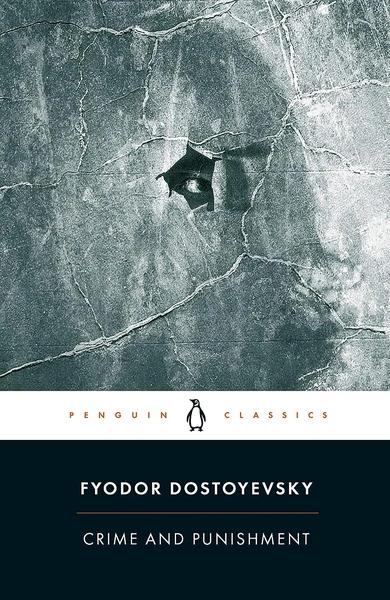
Crime and Punishment Book Review : Redemption in the Shadows
Few novels delve as deeply into the human psyche as Fyodor Dostoevsky’s Crime and Punishment. First published in 1866, this psychological masterpiece remains one of the most compelling and influential works of world literature. Set in the grim alleys and crowded tenements of St. Petersburg, the novel follows a desperate young man’s descent into darkness—and his slow, painful journey back into the light. At its heart, Crime and Punishment is not simply about crime, nor just about punishment. It is about conscience, morality, redemption, and the unyielding hope that even the most tormented soul can be saved.
The story centers on Rodion Romanovich Raskolnikov, a destitute former student who convinces himself that he is intellectually and morally justified in murdering a corrupt pawnbroker. He believes that by ridding society of a “worthless” person, he might serve a greater good. But this cold calculation quickly crumbles under the weight of his own guilt. The real punishment, Dostoevsky suggests, begins not with the law but with the conscience.
Raskolnikov is a fascinating and deeply human character. He is intelligent, proud, and idealistic—but also tortured, confused, and at times, frighteningly detached. Through his inner turmoil, Dostoevsky explores the dangerous power of radical ideas when untethered from compassion. As Raskolnikov grapples with his guilt, the novel becomes a harrowing study of psychological conflict, exposing how isolation, pride, and despair can poison the soul.
And yet, despite its bleak subject matter, Crime and Punishment is ultimately a novel about redemption. This is what makes it not just a philosophical treatise, but a profoundly hopeful story. The path to healing is not easy, nor is it quick—but it is possible. Through the character of Sonya, a gentle and devout young woman who has suffered greatly yet holds fast to her faith and goodness, Raskolnikov is gradually shown the possibility of forgiveness and spiritual rebirth. Her quiet strength, humility, and unwavering compassion serve as a moral anchor in the novel’s stormy sea of ideas.
Dostoevsky’s writing is immersive and intense, filled with vivid imagery, emotional depth, and philosophical insight. He invites readers directly into Raskolnikov’s mind, making us feel his paranoia, dread, and self-loathing. The result is a deeply empathetic portrayal of a man torn between his pride and his conscience, between nihilism and redemption. Despite being written over 150 years ago, the themes feel strikingly modern: the search for meaning, the consequences of alienation, and the belief that no one is beyond saving.
What elevates Crime and Punishment beyond its philosophical and psychological brilliance is its moral core. It doesn’t excuse Raskolnikov’s actions, but it doesn’t write him off either. Instead, it portrays the slow, often painful transformation of a man who must first be broken to be made whole. It challenges readers to confront their own notions of right and wrong, justice and mercy.
In the end, Crime and Punishment is not simply about the wages of sin, but the grace of redemption. It is a timeless reminder that no matter how far one falls, the path to light is never completely closed. Through suffering, confession, and the courage to face the truth, one can rise again—not just legally pardoned, but spiritually reborn.
Dostoevsky believed in the capacity for human transformation, and Crime and Punishment stands as a monument to that belief. It is a dark novel, yes—but it is filled with light where it matters most. For any reader seeking a powerful, thought-provoking journey through the depths of the human soul, this novel is not only essential—it is life-changing.