

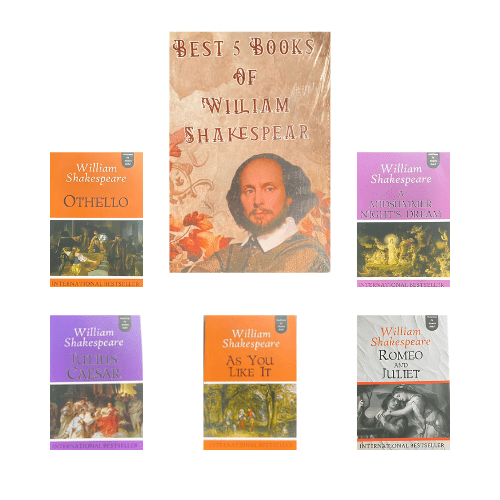
Best 5 Books of William Shakespeare
William Shakespeare stands as one of the most influential and celebrated literary figures in the history of English literature. He rose to prominence during the Elizabethan and Jacobean periods of British theatre eras often referred to as the English Renaissance or the Early Modern Period. These were times of tremendous artistic, cultural, and intellectual growth, where theatre and literature flourished as significant forms of public entertainment and expression. Shakespeare was not merely a participant in this cultural evolution; he was a leading force who helped shape the very foundation of English drama and poetry. His plays, which span across various genres including tragedies, comedies, and histories, have transcended time and geographical boundaries, continuing to captivate audiences and readers for over four centuries. From the psychological complexity of Hamlet, the tragic romance of Romeo and Juliet, and the ambitious power struggles in Macbeth, to the playful wit of A Midsummer Night’s Dream and the insightful commentary on politics and society in Julius Caesar, his dramatic works explore the full range of human emotion and behavior. They delve into themes that are universally relevant love, jealousy, betrayal, ambition, power, fate, and identity making them as meaningful today as they were in the 16th and 17th centuries. However, while Shakespeare’s plays are undoubtedly the cornerstone of his literary legacy and remain at the heart of English literature studies worldwide, they are not the only testament to his genius. His poetry, though sometimes overshadowed by his theatrical works, also holds a significant place in his body of work. In particular, his collection of 154 sonnets has earned enduring admiration for its lyrical beauty, emotional depth, and masterful use of the English language. These sonnets explore themes of love, time, beauty, mortality, and the nature of artistic creation, revealing another dimension of Shakespeare’s literary brilliance. His narrative poems, such as Venus and Adonis and The Rape of Lucrece, also received widespread acclaim during his lifetime and demonstrate his skill in weaving complex stories through verse. These poetic works were especially important during times when the theatres were closed due to outbreaks of the plague, allowing Shakespeare to continue his literary output and connect with his audience through the written word. Even today, Shakespeare’s poems are studied, recited, and appreciated for their poetic form and thematic richness. They have influenced generations of poets and writers and continue to resonate with readers for their exploration of universal truths and human emotions. Shakespeare’s unique ability to craft language in a way that feels both timeless and intimate is perhaps one of the reasons his work endures. Whether in the form of a play or a poem, his words have the power to move, inspire, and challenge audiences and readers alike. In sum, William Shakespeare’s impact extends far beyond the boundaries of the stage. While his dramatic works form the most visible and celebrated part of his legacy, his contributions as a poet are equally significant. Together, his plays and poems offer a comprehensive insight into the human experience and showcase the depth and versatility of his literary talents. This dual legacy of drama and poetry ensures that Shakespeare remains not only a monumental figure of the Elizabethan and Jacobean ages but also a timeless voice in world literature.



Reviews
There are no reviews yet.