🎉 Use Coupon "booksforall" to redeem 10% discount on all purchases.


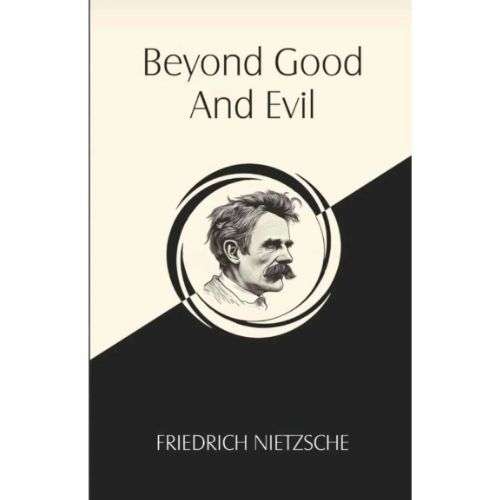
Best Books of All Time: Beyond Good and Evil – 1 Revolutionary Must-Read Classic
Original price was: ₨640.₨499Current price is: ₨499.
Best Books of All Time: Beyond Good and Evil – 1 Revolutionary Must-Read Classic
Friedrich Nietzsche’s Beyond Good and Evil stands among the best books of all time, a groundbreaking philosophical work that shattered centuries of moral and religious convention and permanently altered how humanity understands truth, virtue, and power. First published in 1886, this masterpiece established Nietzsche as one of Europe’s most provocative and influential thinkers. Written with fierce intellect and razor-sharp irony, it remains one of the most timeless books ever produced in modern philosophy and unquestionably one of the books every reader should read for a deeper understanding of Western thought.
In this philosophical tour de force, Nietzsche boldly critiques the foundations of Western intellectual tradition particularly its dependence on absolute truth, religious faith, and rigid moral binaries. He challenges the comforting illusion of universal good and evil, arguing that such ideas often arise from psychological weakness rather than strength. For Nietzsche, Christian morality represents what he calls a “slave morality,” a value system that glorifies humility, obedience, and self-denial while suppressing individuality, ambition, and creative excellence. These radical insights secure the book’s place among essential must read books in global intellectual history.
At the core of Beyond Good and Evil lies Nietzsche’s revolutionary concept of the “will to power.” This powerful idea celebrates life’s dynamic and creative force—the internal drive that compels individuals to overcome limitations, shape their destiny, and assert their existence. Instead of submitting to inherited moral codes, Nietzsche insists that human beings must create their own values and live courageously in a world without divine guarantees. His philosophy is not pessimistic but empowering, positioning this work firmly among the best books of all time for readers seeking intellectual challenge and personal transformation.
This Penguin Classics edition, translated by R. J. Hollingdale with an insightful introduction by Michael Tanner, presents Nietzsche’s complex ideas with clarity while preserving the lyrical intensity of the original German text. Tanner’s commentary situates Nietzsche within the broader development of European philosophy and explains why his arguments continue to influence contemporary discussions about morality, identity, and power. Such enduring relevance is why this remains one of the most respected and timeless books available today—and increasingly one of the popular books in Nepal among serious readers of philosophy.
Nietzsche himself was an extraordinary and enigmatic thinker. Born in 1844, he became a professor at the University of Basel at just 24 years old. However, persistent illness forced him into early retirement, after which he lived in relative isolation, dedicating himself entirely to writing. His later years were marked by mental collapse in 1899, yet his intellectual legacy endured. His work profoundly shaped writers and philosophers such as George Bernard Shaw, D. H. Lawrence, Thomas Mann, and Jean-Paul Sartre. Through them and many others, Nietzsche’s thought continues to shape literature, psychology, and political philosophy.
Beyond Good and Evil is not simply a philosophical text it is an intellectual confrontation. It demands that readers question inherited truths, rethink moral assumptions, and embrace the courage to define their own path. That is why it stands securely among the books every reader should read, a defining classic within the category of must read books worldwide.
For readers wishing to explore further, Thus Spoke Zarathustra serves as a powerful companion volume, expanding on themes of self-overcoming and human transcendence.
As Michael Tanner observes, Beyond Good and Evil remains one of the greatest works by one of the greatest thinkers an enduring philosophical masterpiece that continues to challenge, provoke, and inspire generations across the world.
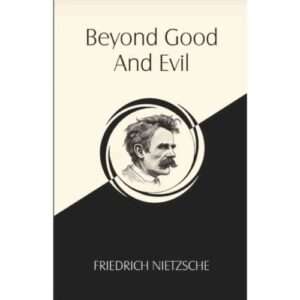
Description
Best Books of All Time: Beyond Good and Evil – 1 Revolutionary Must-Read Classic
- Philosophical Masterpiece: Beyond Good and Evil stands among the best books of all time, offering Friedrich Nietzsche’s revolutionary critique of traditional Western morality and religion, first published in 1886. This intellectual classic continues to shape modern philosophy and remains one of the most timeless books ever written.
- Break from Conventional Morality: Nietzsche exposes how long-held beliefs about truth, virtue, and God often stem from weakness and conformity rather than strength or authenticity. It is one of those books every reader should read to understand the foundations of modern thought.
- Rejection of Absolute Values: The book dismantles the false moral binaries of “good” and “evil,” urging readers to move beyond inherited ideals and question so-called universal truths. Its bold arguments secure its place among truly must read books in philosophy.
- Concept of “Will to Power”: Central to Nietzsche’s thought, this idea celebrates individual strength, creativity, and self-mastery as the driving forces of human existence. These insights have made it one of the best books of all time for readers seeking deeper intellectual challenge.
- Critique of Christian Morality: Nietzsche famously describes Christianity as a “slave morality” that glorifies submission and guilt while suppressing personal greatness and independence—an argument that continues to provoke discussion worldwide, including among readers of popular books in Nepal.
- Call for Individual Freedom: Instead of blindly following societal norms, Nietzsche encourages readers to create their own values and embrace life with courage and vitality—making it one of the most influential and timeless books in philosophical literature.
- Accessible Penguin Classics Edition: This edition, translated by R. J. Hollingdale with an insightful introduction by Michael Tanner, provides clarity to Nietzsche’s complex and abstract arguments, making it accessible to modern readers.
- Influential Thinker: Nietzsche’s ideas reshaped modern thought and influenced writers and philosophers such as George Bernard Shaw, D. H. Lawrence, Thomas Mann, and Jean-Paul Sartre.
- Timeless Relevance: A daring and thought-provoking work that continues to challenge moral assumptions and inspire readers worldwide. For those searching for the best books of all time, this remains one of the definitive must read books and a cornerstone among books every reader should read.
https://readersspacenepal.com/product/becoming/
https://www.facebook.com/readersspacenepal