🎉 Happy Dashain Readers. Use Coupon "dashain50" to get upto 50% discount on all purchases.

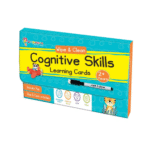
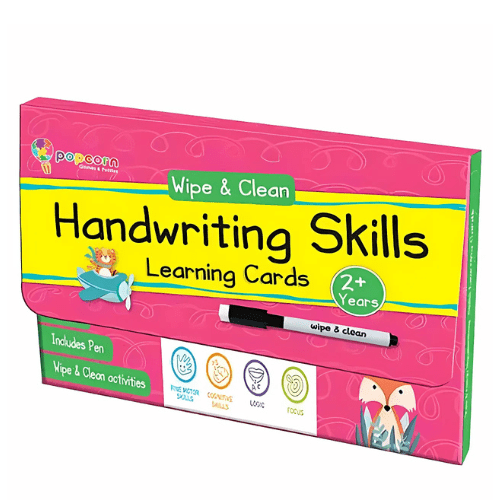
Children’s Book Wipe & Clean Handwriting Skills
Original price was: ₨564.₨536Current price is: ₨536.
Children’s Book Wipe & Clean Handwriting Skills
The early years of a child’s life are critical for establishing skills that form the foundation for lifelong learning. Children absorb knowledge quickly during this stage, and the right educational tools can guide their curiosity in meaningful ways. Learning Cards are specially designed to support this journey, offering engaging activities that develop essential skills such as cognitive abilities, motor control, handwriting readiness, and even social interaction. With these cards, learning becomes not just effective but also enjoyable for both children and parents.
One of the key strengths of Learning Cards is their ability to nurture cognitive skills. Each card is carefully crafted to stimulate thinking, recognition, and problem-solving in young learners. By practicing with patterns, numbers, shapes, and lines, children begin to understand concepts like sequencing, categorization, and logical connections. These exercises sharpen memory, improve attention span, and lay the groundwork for critical thinking skills that are essential when they transition into formal schooling.
In addition to cognitive growth, the cards also play a vital role in developing motor skills, particularly those related to early writing. The practice of tracing shapes, forming lines, and eventually writing numbers and letters helps refine fine motor control. Every time a child grips a marker or pencil to complete an activity on the card, they are strengthening the small muscles in their fingers and hands. This repeated practice is essential for handwriting readiness, ensuring that when the time comes, children feel confident holding a writing tool and producing legible letters and numbers.
Handwriting is not simply about putting pen to paper—it is a complex skill that requires coordination, precision, and confidence. Learning Cards provide children with structured opportunities to engage in writing-like activities in a playful and low-pressure environment. For example, drawing a straight line, tracing a circle, or copying a simple letter introduces them to the movements needed for handwriting while keeping the process fun. As they complete these tasks, children gain confidence in their ability to write, turning what might otherwise feel like a challenge into a rewarding accomplishment.
Another important aspect of Learning Cards is their ability to promote social skills. While the cards can certainly be used independently, they are most effective when parents, caregivers, or teachers participate in the activity. By guiding children, asking questions, or offering encouragement, adults can turn simple card exercises into opportunities for communication and bonding. These shared learning sessions help children build listening skills, learn to follow instructions, and develop patience—all of which are important social-emotional skills for preschool and beyond.
Parents often face challenges when teaching young children because traditional methods may feel overwhelming for little learners. Learning Cards simplify the process by breaking down complex skills into small, manageable steps. Each card focuses on a single activity, making it easier for parents to introduce concepts gradually. This structured approach reduces stress for both parent and child, creating a positive learning environment where progress can be celebrated at every step.
Durability and reusability are additional advantages of these cards. Many sets are laminated or wipe-clean, meaning children can practice repeatedly without fear of making permanent mistakes. This flexibility gives them the freedom to experiment, erase, and try again instilling resilience and teaching that mistakes are part of the learning process. Parents, too, benefit from the reusability, as the cards provide long-term value and can be incorporated into daily routines or revisited whenever a child needs extra practice.
Beyond individual learning, the cards are versatile tools that can be used in both home and classroom settings. At home, they provide screen-free entertainment that is both fun and educational. In preschools or early learning centers, they can be incorporated into group activities, fostering peer interaction and cooperative play. Whether used during quiet time, family learning sessions, or classroom instruction, the cards adapt seamlessly to different environments.
Ultimately, Learning Cards are more than just an educational resource they are a bridge between play and structured learning. They engage children’s curiosity, channel their energy into meaningful practice, and prepare them for the academic challenges ahead. By focusing on cognitive growth, motor control, handwriting readiness, and social interaction, these cards address multiple areas of development in a holistic way.
For parents, caregivers, and teachers, they provide a practical and enjoyable way to teach essential skills without pressure. For children, they represent an exciting journey of discovery—one where learning feels like play and every card turned brings new confidence.

Description
Children’s Book Wipe & Clean Handwriting Skills
-
Comprehensive Skill Development – Designed to build cognitive, motor, handwriting, and social skills in early learners.
-
Boosts Cognitive Growth – Activities with shapes, numbers, and patterns enhance memory, attention, and problem-solving.
-
Prepares for Handwriting – Tracing lines, letters, and numbers strengthens finger muscles and builds writing confidence.
-
Supports Fine Motor Skills – Regular practice improves grip, coordination, and control, making writing easier over time.
-
Encourages Confidence – Step-by-step exercises turn writing into a fun, rewarding activity, reducing frustration and fear of mistakes.
-
Promotes Social Interaction – Parents, caregivers, or teachers can guide activities, fostering communication and listening skills.
-
Simplifies Teaching – Each card focuses on a single concept, making it easier for parents to teach without overwhelming the child.
-
Reusable & Durable – Often laminated or wipe-clean, allowing endless practice and corrections without damage.
-
Versatile Learning Tool – Perfect for both home and preschool use, supporting solo play, family learning, or group activities.
-
Ideal Early Learning Aid – A practical resource that bridges play and education, helping children gain confidence in learning.