🎉 Use Coupon "booksforall" to redeem 10% discount on all purchases.


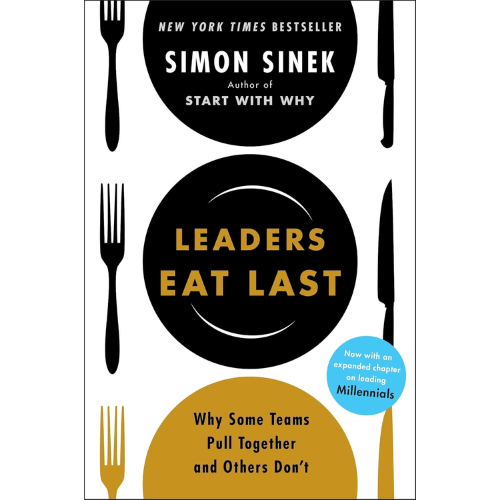
Leaders Eat Last: 9 Game-Changing Leadership Lessons for Entrepreneurs
Original price was: ₨960.₨580Current price is: ₨580.
Leaders Eat Last: 9 Game-Changing Leadership Lessons for Entrepreneurs
In today’s fast-changing professional world, leadership is no longer defined simply by authority or title. True leadership is measured by responsibility, empathy, and the ability to support and protect the people who depend on us. This powerful idea lies at the heart of Leaders Eat Last: Why Some Teams Pull Together and Others Don’t, written by renowned leadership thinker Simon Sinek. The book has become one of the most influential business mindset books, offering valuable lessons for anyone interested in building stronger teams, organizations, and communities.
At its core, the book argues that leadership is not about power or privilege. Instead, leadership is about creating an environment where people feel safe, valued, and motivated to contribute their best efforts. When leaders prioritize the wellbeing of their teams, those teams naturally develop trust and loyalty. In return, they work harder, collaborate more effectively, and remain committed to the organization’s goals. This philosophy makes the book particularly relevant among entrepreneurship books and startup books, as founders and business leaders must build cultures of trust from the very beginning.
Simon Sinek explores how great leaders put the needs of their teams before their own interests. He explains that organizations succeed when leaders focus on protecting and supporting their people rather than chasing short-term profits or personal recognition. This leadership approach encourages teamwork, innovation, and long-term stability. For readers searching for books for entrepreneurs, the lessons in this work highlight the importance of developing strong organizational cultures that motivate employees and create sustainable success.
One of the most compelling elements of the book is its use of real-world examples. Sinek draws inspiration from leaders across different sectors, including military organizations, corporations, and government institutions. In particular, he highlights the leadership philosophy of officers in the United States Marine Corps. These leaders are trained to place the needs of their team members ahead of their own comfort or recognition. The symbolic idea that “leaders eat last” reflects a deeper principle: effective leaders willingly sacrifice personal convenience to ensure the safety and wellbeing of those they lead.
By examining these leadership models, Sinek explains how trust and cooperation develop inside organizations. When employees feel that their leaders genuinely care about them, they are more willing to support the organization’s mission. This creates a culture where individuals work together rather than competing against each other. Such environments are crucial for startups and growing companies, making this book especially valuable among startup books and entrepreneurship books that focus on building successful teams.
The book also discusses the science behind human behavior in organizations. Sinek explores how chemicals such as dopamine, serotonin, and oxytocin influence motivation, trust, and teamwork. When leaders create a supportive and fair workplace, these natural responses encourage cooperation and strengthen relationships between colleagues. This scientific perspective adds depth to the book and explains why strong leadership cultures produce more resilient organizations.
For entrepreneurs and business professionals, the lessons presented in Leaders Eat Last go beyond theory. The book provides a practical framework for building organizations where employees feel respected, supported, and inspired. Such environments lead to higher productivity, stronger loyalty, and long-term business success. This is why the book continues to be recommended among the most impactful business books Nepal, especially for readers interested in leadership development and organizational growth.
In summary, Leaders Eat Last offers an insightful perspective on what it truly means to lead. Instead of focusing on authority, it emphasizes responsibility, empathy, and service. Leaders who prioritize the wellbeing of their teams create workplaces built on trust and cooperation. These principles make the book an essential addition to collections of business mindset books, books for entrepreneurs, and startup books, helping readers understand how compassionate leadership can transform both organizations and individuals.

Description
Leaders Eat Last: 9 Game-Changing Leadership Lessons for Entrepreneurs
- Leaders Eat Last: Why Some Teams Pull Together and Others Don’t by Simon Sinek explains that true leadership is not about authority or status, but about taking responsibility for the wellbeing and success of the people you lead.
- The book emphasizes that strong leaders create environments where employees feel safe, valued, and motivated, which leads to higher productivity and stronger teamwork.
- One of the central ideas is that when leaders prioritize their teams, those teams naturally become more loyal, collaborative, and committed to achieving shared goals.
- Sinek uses examples from military organizations, large corporations, and government institutions to demonstrate how effective leadership practices build trust and unity within teams.
- The concept of “leaders eat last” symbolizes leaders who are willing to sacrifice personal comfort or recognition in order to protect and support their people.
- The book explains the science behind teamwork and motivation, discussing how brain chemicals like dopamine, serotonin, and oxytocin influence trust, cooperation, and workplace satisfaction.
- When leaders focus on people rather than short-term profits, organizations develop a culture of long-term stability, innovation, and loyalty.
- The book is especially valuable for founders and managers, making it a popular choice among business books Nepal, entrepreneurship books, and startup books.
- Entrepreneurs can learn how to build organizations where employees feel respected and supported, which is essential for sustainable business growth.
- Overall, the book encourages leaders to adopt a service-oriented leadership mindset, proving that taking care of people ultimately leads to stronger teams and successful organizations.
https://www.facebook.com/readersspacenepal
https://readersspacenepal.com/product/the-summer-i-turned-pretty/