🎉 Happy Dashain Readers. Use Coupon "dashain50" to get upto 50% discount on all purchases.


The Art of Spending Money: 7 Smart Principles for Mindful, Meaningful Spending
Original price was: ₨999.₨748Current price is: ₨748.
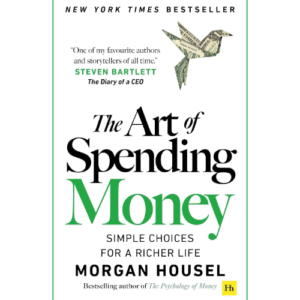
The Art of Spending Money is the third major work by Morgan Housel, the bestselling author of The Psychology of Money and Same as Ever. In this book, Housel explores a deceptively simple idea that many people struggle to apply in real life: money can meaningfully contribute to happiness, but only when it is used with intention and understanding.
While most people believe money has the power to improve their lives, very few know how to unlock its full potential. Some overspend on things that deliver only short-lived pleasure, while others hesitate to spend on choices that could genuinely enhance their well-being. Housel seeks to close this gap by offering thoughtful, psychology-based guidance on how to spend, save, and invest in ways that support both financial security and emotional satisfaction.
Rather than focusing on formulas, budgets, or technical investing tactics, Housel dives into the deeply human side of financial behavior. He argues that money decisions are rarely driven by logic alone. Instead, they are shaped by emotions, personal history, identity, and social influence.
Through engaging stories and simple mental frameworks, he encourages readers to examine not only what they do with their money, but why they do it. By understanding these internal drivers, individuals can begin to build a healthier and more intentional relationship with their finances.
One of the book’s central themes is the difference between envy and admiration, two emotions that are often confused. Housel explains that much spending is fueled by comparison rather than genuine desire. Social media, peer pressure, and cultural norms subtly push people toward lifestyles that do not truly reflect their values.
By recognizing when envy is influencing financial decisions, readers can redirect their resources toward goals and experiences that genuinely matter to them. This shift allows money to serve personal fulfillment rather than social approval.
Another key idea in the book is the relationship between expectations and income. Housel suggests that happiness depends less on how much money someone earns and more on whether their expectations exceed their resources. When expectations rise faster than income, dissatisfaction often follows.
Learning to simplify, slow down, or redefine success can be more liberating than endlessly chasing higher earnings. In this way, Housel challenges the belief that financial success requires constant hustle, speed, and aggressive growth. Instead, he emphasizes patience, consistency, and moderation as the foundations of lasting wealth.
The book also introduces the concept of “social debt,” the emotional and financial burden created by trying to meet external standards or impress others. This invisible pressure can quietly drain both happiness and financial stability.
Housel encourages readers to identify social debt early, free themselves from unnecessary comparison, and adopt a more inwardly focused approach to money that prioritizes personal values over public perception.
Throughout the book, Housel helps readers distinguish between spending that merely entertains and spending that creates lasting value. He highlights the importance of investing in experiences, relationships, personal growth, and future flexibility—areas that tend to deliver more enduring fulfillment than material possessions alone.
He also addresses financial regret, explaining how thoughtful, forward-looking decisions can reduce the emotional cost of mistakes and missed opportunities.
In The Art of Spending Money, Housel blends psychology, philosophy, and personal finance to offer a richer understanding of what it means to live well. The book invites readers to slow down, reflect deeply, and rethink how money can serve their lives—not as a symbol of status or competition, but as a practical tool for building meaning, freedom, and contentment.
Description
The Art of Spending Money: 7 Smart Principles for Mindful, Meaningful Spending
-
From the bestselling author of The Psychology of Money — Morgan Housel returns with powerful insights on money and happiness.
-
Explores how money can buy happiness when spent with intention and emotional clarity.
-
Teaches psychological tools, not just financial rules, to improve your relationship with money.
-
Reveals the difference between envy and admiration, helping readers avoid comparison-driven spending.
-
Shows how aligning expectations with income can increase satisfaction more than earning more money.
-
Explains why slow, steady wealth-building is often more effective than rushing or taking big risks.
-
Introduces the concept of “social debt”, the emotional burden of keeping up with others.
-
Helps readers identify meaningful investments—experiences, relationships, skills that actually enhance long-term happiness.
-
Offers relatable stories and simple frameworks to overcome common money traps and regrets.
-
Guides readers toward smarter spending and investing choices that create a richer, more purposeful life.
https://www.facebook.com/readersspacenepal
https://readersspacenepal.com/product/the-syndicator/


