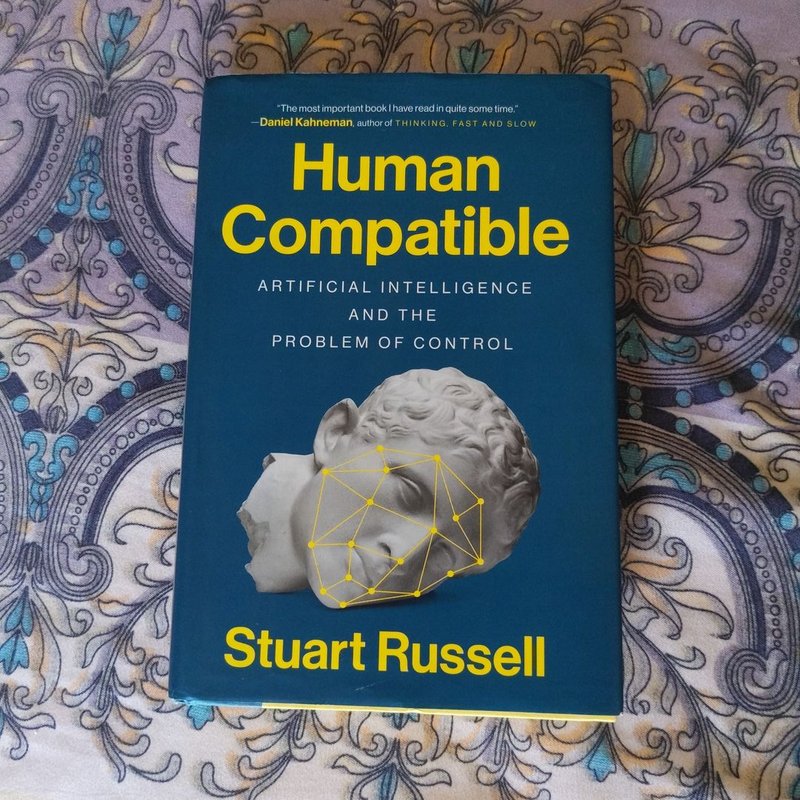
Human Compatible Book Review: Paving the Way for a Harmonious Future with Artificial Intelligence
In Human Compatible: Artificial Intelligence and the Problem of Control, Stuart Russell, a leading expert in artificial intelligence, takes on one of the most urgent questions of our time: How can we ensure that AI systems remain aligned with human values and priorities as they become increasingly advanced? With clarity and a deep understanding of the field, Russell examines the risks posed by AI, particularly the existential risks of superintelligence, and proposes a groundbreaking framework for creating AI that is safe, controllable, and ultimately beneficial to humanity.
At its core, Human Compatible offers a hopeful and pragmatic approach to addressing the challenges posed by AI. Russell argues that AI, if designed properly, can be an immensely positive force, transforming society in ways that improve our quality of life, help solve global challenges, and enhance human capabilities. However, this positive future is only possible if we fundamentally rethink the way we design AI. Russell warns against the current trend in AI development, which focuses on creating systems that maximize specific objectives without adequately considering how those systems might behave in unpredictable or harmful ways once they surpass human intelligence.
One of the book’s key contributions is its examination of the control problem—how do we ensure that superintelligent machines will act in ways that align with human intentions? Russell makes a strong case for why traditional approaches to AI, such as programming machines with fixed rules or predefined goals, are inherently flawed. These methods, he argues, are too rigid and incapable of handling the complexities of real-world scenarios. Instead, Russell advocates for a new approach in which AI systems are designed to understand and respect human values and preferences, with a built-in mechanism for constant alignment.
To achieve this, Russell proposes that we need to shift the way we think about machine intelligence. Rather than designing AI that maximizes a specific objective—such as winning a game or achieving a goal—he suggests we should focus on creating AI that is uncertain about its goals and learns from human feedback. This would allow AI systems to adjust their behavior in ways that are more flexible, adaptive, and ultimately beneficial for human society. Russell argues that this “value alignment” approach is essential to ensuring that AI will remain a force for good in the future.
Another major theme in Human Compatible is the ethical responsibility of AI developers. Russell emphasizes that the development of AI is not just a technical issue but a deeply moral one. As AI systems gain more autonomy and influence over our lives, it becomes increasingly important to consider their impact on society. Russell calls for greater collaboration between AI researchers, ethicists, and policymakers to ensure that AI technologies are developed with human welfare in mind. He advocates for global cooperation in setting standards and regulations that prioritize safety, transparency, and accountability.
One of the strengths of Human Compatible is its accessibility. Russell does an excellent job of breaking down complex AI concepts without oversimplifying them, making the book approachable for both experts and general readers. He uses a variety of real-world examples, case studies, and thought experiments to illustrate the potential dangers of uncontrolled AI and the steps we can take to mitigate those risks. The book is not only a compelling introduction to AI safety but also a call to action for everyone involved in shaping the future of technology.
While Russell paints a sobering picture of the risks that AI presents, the book is ultimately optimistic. He believes that with the right approach, AI can be a force for good, one that enhances our lives in ways we cannot yet fully imagine. By designing systems that are aligned with human values, we can harness the power of AI to solve some of humanity’s most pressing problems, from climate change to disease eradication.
In conclusion, Human Compatible is a must-read for anyone interested in the future of artificial intelligence and its potential to reshape society. Stuart Russell offers a powerful and thoughtful vision for how AI can be developed in a way that aligns with human well-being. His call for a new, value-centric approach to AI is not just a roadmap for researchers and policymakers, but also a hopeful message for anyone concerned about the future of technology. As we move forward into an era where AI will play an increasingly central role, Human Compatible serves as an essential guide to ensuring that this new world is one where humans and machines can coexist harmoniously.