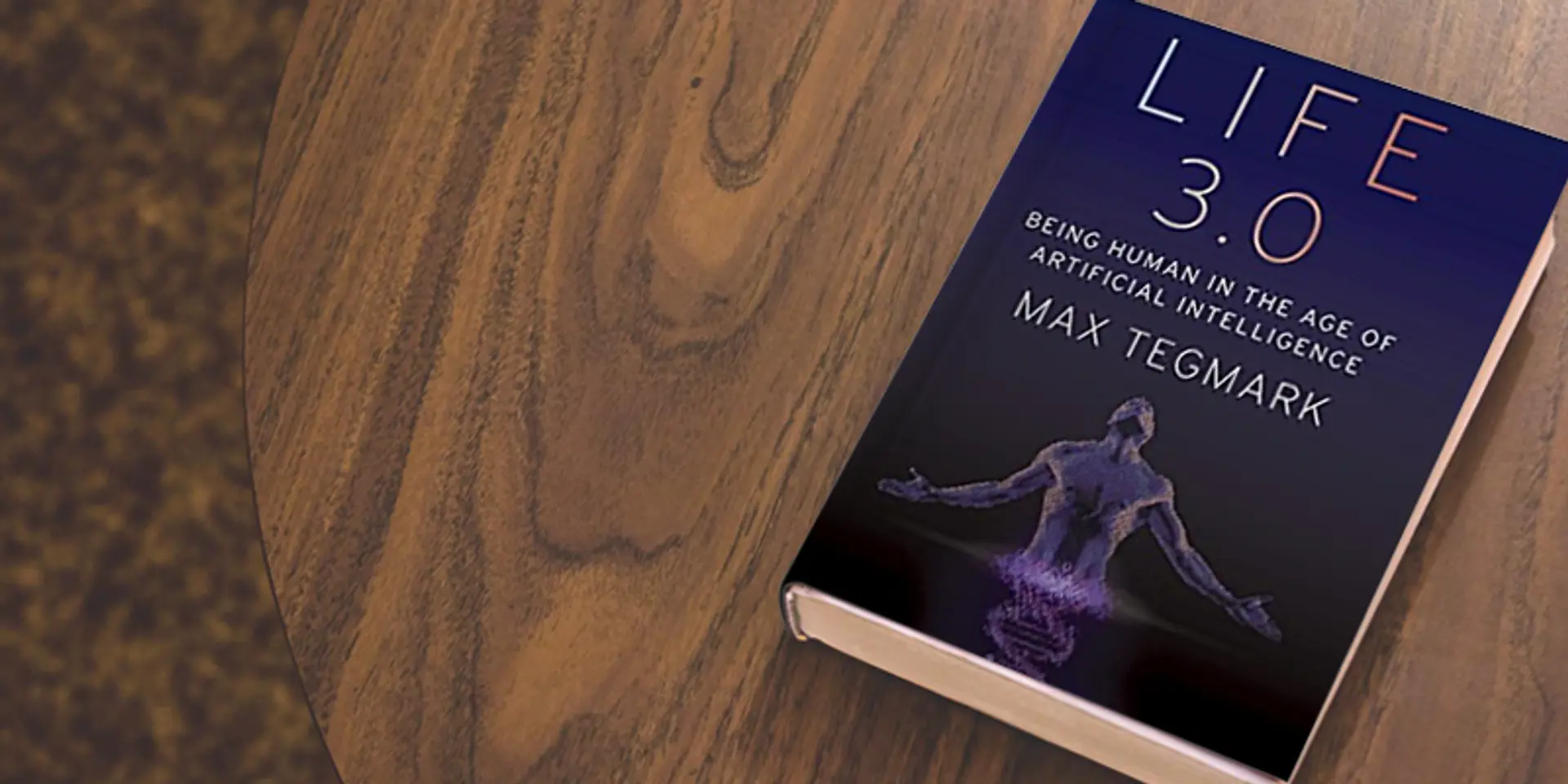
Life 3.0 Book Review : Navigating the Future of Artificial Intelligence with Insight and Hope
Max Tegmark’s Life 3.0: Being Human in the Age of Artificial Intelligence is a compelling and thought-provoking exploration of the future of life, consciousness, and technology in a world dominated by artificial intelligence (AI). Tegmark, a renowned physicist and AI researcher, delves into some of the most critical questions facing humanity as AI continues to evolve. In Life 3.0, he explores the possibilities, risks, and ethical dilemmas posed by the advent of superintelligent machines, offering readers a balanced and insightful perspective on how to shape a future where technology serves the betterment of humanity.
The book’s title refers to the different stages of life as we know it: Life 1.0 is biological life—our instincts and capabilities are determined by our DNA, and evolution dictates our development. Life 2.0 represents the human ability to learn and adapt, a stage where culture and technology have allowed us to build and create things beyond our genetic limitations. Finally, Life 3.0 represents the future of life when intelligence can design and improve itself, and potentially transcend human limitations. This is the realm of artificial general intelligence (AGI) and superintelligence—the point at which machines not only emulate human cognition but exceed it.
Tegmark takes readers on a journey through the potential futures that AI could unlock. He outlines a variety of scenarios—some optimistic, some troubling. A central theme of Life 3.0 is the idea that humanity has a unique opportunity to shape the development of AI in a way that maximizes its benefits while minimizing its risks. Unlike past technological advances that were often implemented without a clear understanding of their long-term consequences, AI offers us the chance to actively guide its evolution from the very start.
The book is divided into several sections, each tackling a different aspect of AI’s potential impact. Tegmark begins with a detailed exploration of what AI is, where it stands today, and where it could be heading in the near and distant future. He provides an accessible breakdown of AI concepts, making complex topics understandable to a general audience. The book also explores key ethical questions such as the role of AI in society, how it might affect employment, its potential to exacerbate inequalities, and the risk of creating systems that could act in ways detrimental to humanity.
One of the most intriguing aspects of Life 3.0 is its treatment of the long-term existential risks posed by superintelligent AI. Tegmark doesn’t shy away from discussing the worst-case scenarios, but he does so in a rational, calm manner, presenting the evidence and arguments for why these risks are real, yet manageable. He stresses the importance of safety research and collaboration between governments, businesses, and academia to ensure that AI is developed with safety protocols in place.
Tegmark also addresses the moral and philosophical implications of AGI. He asks profound questions like: If a machine becomes conscious, what rights does it have? Can a machine ever truly understand what it means to be human? These questions may seem speculative, but Tegmark’s meticulous analysis encourages readers to think deeply about the nature of consciousness, ethics, and what it means to be alive in the age of artificial intelligence.
Despite the serious topics it addresses, Life 3.0 is ultimately an optimistic book. Tegmark emphasizes the positive potential of AI to improve society—through solving complex problems like climate change, enhancing healthcare, and eliminating poverty. He encourages a future in which humanity works alongside intelligent machines to create a better world, where technology is a tool to amplify human flourishing.
One of the book’s strengths is its ability to present a nuanced view of AI. Tegmark doesn’t take a binary stance—AI is not inherently good or bad; it’s what we do with it that will determine its impact. The book is filled with thought-provoking ideas, urging readers to consider not only how we can develop AI safely but also how we can harness its power for positive societal change.
In conclusion, Life 3.0 is a must-read for anyone interested in the future of AI and its potential to reshape humanity’s destiny. Max Tegmark provides an engaging and well-researched examination of one of the most important challenges of our time. With clarity, foresight, and optimism, he reminds us that the future of AI lies in our hands—and it’s up to us to guide it in a direction that benefits all of humanity.