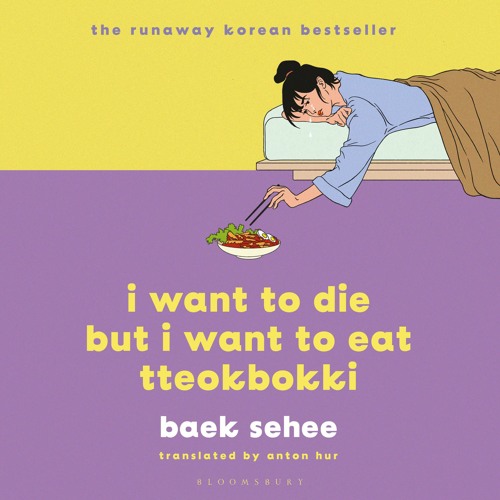
I Want to Die but I Want to Eat Tteokbokki Book Review: A Brave, Honest Look at Living with Depression
Baek Sehee’s I Want to Die but I Want to Eat Tteokbokki is a deeply personal, raw, and quietly powerful exploration of depression, identity, and the desire for meaning in the everyday. With a title that is both startling and strangely comforting, this slim but weighty book offers a refreshingly honest take on mental health—not as a dramatic, life-altering event, but as a constant hum in the background of daily life. Through fragmented thoughts, therapy transcripts, and personal reflection, Baek Sehee opens the door to a kind of emotional intimacy rarely seen in contemporary literature.
What makes this book stand out isn’t just its relatability, but its refusal to offer easy answers. Instead of presenting a narrative of overcoming depression in a neat, linear fashion, the author embraces the messiness of it. She doesn’t portray herself as a hero or a victim—she’s simply a person trying to understand why she feels the way she does. That vulnerability, paired with an almost clinical observation of her own emotions, makes the book not just relatable, but radically real.
The book is primarily structured around a series of therapy sessions between Sehee and her psychiatrist. These transcripts are revealing, sometimes repetitive, and often filled with moments of quiet breakthrough. She discusses the shame of appearing weak, the burden of wanting to please others, and the internal disconnect between what she feels and how she believes she should feel. The psychiatrist’s gentle, sometimes firm responses offer both insight and a reflection of how difficult true emotional work can be.
Between sessions, Sehee includes short reflections that give more context to her thoughts and behavior. These interludes are beautifully written in a voice that is detached but aching, thoughtful but searching. She describes feeling like she’s watching herself live, struggling with self-worth, and wondering why she can’t just “get better.” And yet, in the same breath, she expresses her love for the small joys in life—eating tteokbokki, drinking coffee, posting on social media. This juxtaposition between despair and delight is what makes the book so powerful.
The title itself is the perfect encapsulation of this duality: the desire to end one’s suffering alongside the desire to enjoy something as simple as a favorite food. It speaks to a very real and often misunderstood experience of depression—where someone can smile, laugh, and function outwardly while carrying a profound heaviness inside. Sehee doesn’t dramatize her pain, nor does she diminish it. She simply shows it as it is: ever-present, exhausting, and sometimes inexplicably softened by life’s small pleasures.
What elevates I Want to Die but I Want to Eat Tteokbokki beyond a personal memoir is its ability to resonate universally. You don’t have to be Korean, female, or even clinically depressed to understand what Baek Sehee is talking about. Her words touch on the fundamental human longing to be seen, to be understood, and to make peace with the contradictions within ourselves.
In a world that often demands polished success stories and tidy recoveries, this book stands as a quiet act of resistance. It gives voice to the silent battles so many face, and it does so without shame. It reminds us that healing isn’t linear, that it’s okay not to have everything figured out, and that sometimes, surviving is found in the simple act of choosing to stay—for another meal, another walk, another conversation.
In the end, I Want to Die but I Want to Eat Tteokbokki is more than just a book about depression—it’s a gentle, powerful invitation to embrace life in all its contradictory beauty. Baek Sehee may not offer a roadmap to happiness, but she offers something even more valuable: truth, honesty, and hope in the everyday.